
Red Light Therapy: What the Science Actually Says
Red light therapy has traveled an unusual road — from NASA plant experiments to dermatology clinics to nearly every wellness conversation of the past few years. When a therapy becomes this popular this quickly, a fair question follows: is there real science behind red light therapy, or is it just a glow? The honest answer is encouraging. Here is what the research supports, what it doesn't (yet), and how we use red light inside Solara Aevum's bio-optimization circuit.
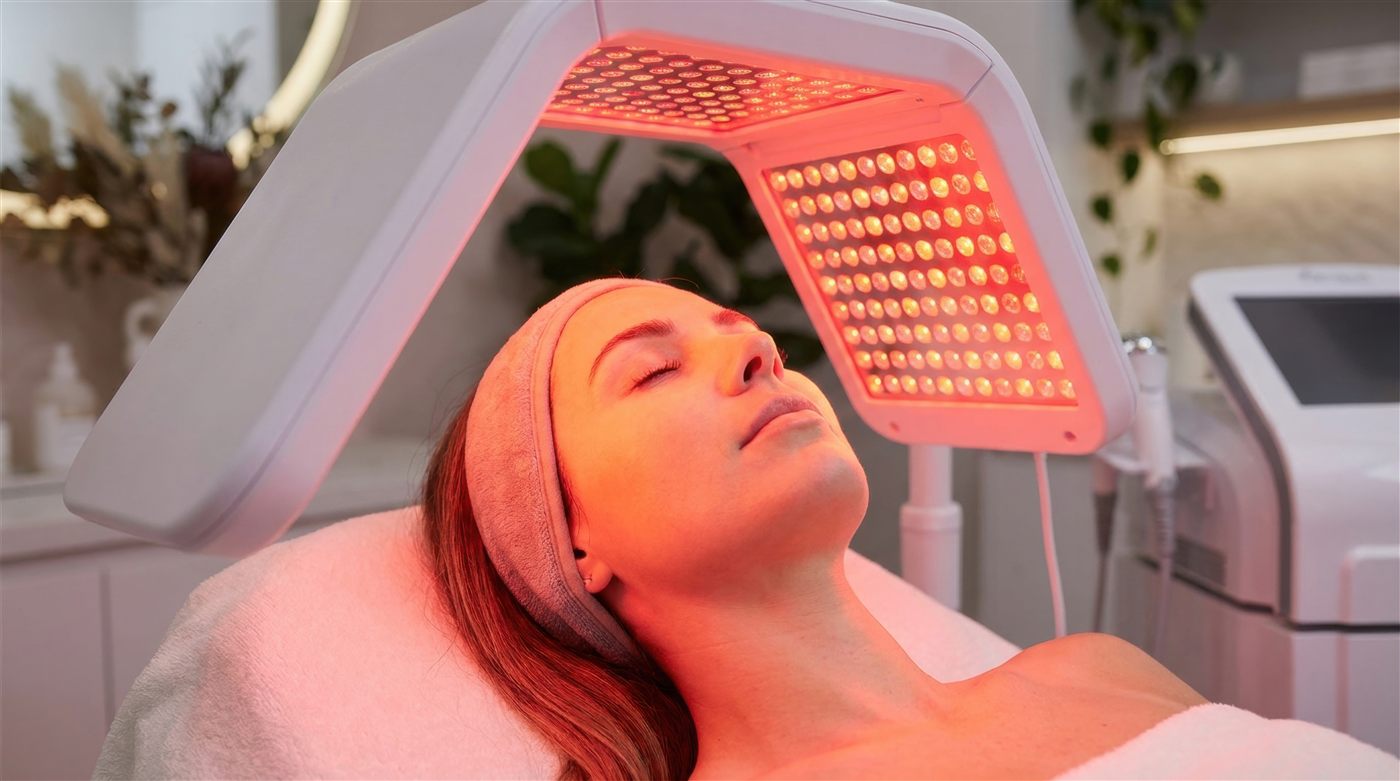
What Is Red Light Therapy?
Red light therapy — researchers call it photobiomodulation or low-level light therapy — exposes the body to specific wavelengths of red and near-infrared light, typically in the 600–900 nanometer range. Unlike ultraviolet light, these wavelengths do not damage the skin. Instead, they are absorbed by structures inside your cells, most notably the mitochondria — the engines that produce cellular energy.
The prevailing model is elegantly simple: when mitochondria absorb red and near-infrared light, they produce energy more efficiently. Cells with more energy repair themselves faster, produce more of the proteins they are designed to make, and manage inflammation more effectively.
The Evidence for Skin: Collagen, Texture, and Tone
Skin rejuvenation is where red light therapy has its strongest clinical footing. A frequently cited randomized controlled trial found that participants treated with red light showed significant improvements in skin complexion and roughness, with measured intradermal collagen density increasing roughly 20% over a course of 30 sessions. Laboratory research published in dermatology journals has likewise shown that red and near-infrared light increases the expression of collagen, elastin, and hyaluronic acid — the trio responsible for firm, supple, hydrated skin.
In practical terms, clients using red light consistently tend to notice softer fine lines, more even tone, and the kind of subtle luminosity that is hard to attribute to any one thing. It is also why we layer red light into several of our signature facial rituals rather than treating it as a standalone gadget.
The Evidence for Recovery and Inflammation
Beyond skin, photobiomodulation research has expanded into recovery and rehabilitation. Recent consensus reviews support its use for concerns ranging from pattern hair loss to certain types of wounds, and it has entered clinical guidelines for managing oral mucositis in cancer care — a sign of how seriously mainstream medicine now takes the mechanism.
For everyday wellness, the most relevant findings involve muscle recovery and soreness: studies suggest red and near-infrared light can reduce post-exercise inflammation and support faster tissue repair. This is why athletes adopted the therapy early, and why we pair it with PEMF, lymphatic massage, and mild hyperbaric oxygen in our recovery circuit — the modalities complement one another.
What Red Light Therapy Is Not
Honest wellness means honest limits. Red light therapy is not a replacement for medical treatment, it does not "melt fat" in any clinically meaningful way on its own, and a single session will not transform your skin. The research consistently points to one requirement: consistency. Collagen remodeling and cellular adaptation unfold over weeks of regular exposure, not minutes.
What a Session Feels Like at Solara
A red light session at Solara Aevum is genuinely restful: you relax under panels of warm, painless light for roughly 15–25 minutes. There is no downtime — many clients describe leaving with the calm alertness of a good nap. We often sequence red light before a facial (to prime the skin) or alongside our HALO2RED salt-oxygen-light experience, which combines halotherapy, passive oxygen, and red light in a single session.
Frequently Asked Questions
How often should I do red light therapy?
Research protocols typically involve two to five sessions per week over 8–12 weeks for skin goals. For general recovery and well-being, many clients settle into a steady weekly rhythm — which is exactly what our Vitality Membership was designed for.
Is red light therapy safe?
For most people, yes — it is non-invasive, painless, and free of UV radiation. People taking photosensitizing medications or with certain eye conditions should consult their physician first, and eye protection is provided during sessions.
When will I see results?
Many people feel benefits — relaxation, reduced soreness — immediately. Visible skin changes generally emerge after 4–12 weeks of consistent sessions, in line with how long collagen takes to rebuild.
Can I combine red light with other treatments?
Yes — and you arguably should. Red light pairs beautifully with facials, microneedling recovery, lymphatic massage, and the broader bio-optimization circuit. Your provider will sequence treatments so each amplifies the next.
Want to feel what consistent cellular care does for your energy and skin? Book a session or explore the full biohacking circuit at our Green Lake sanctuary.
This article is for educational purposes and is not medical advice. Individual results vary; a personal consultation determines whether any treatment is right for you.